
Digital Ad Size Standards
The Complete Guide to Digital Ad Sizes for 2026
Ad dimensions are a primary driver of campaign efficacy. Beyond simple aesthetics, the right size ensures high-impact visibility and significantly improves click-through performance across all platforms.

Why Size (and Format Choice) Still Matters
Choosing the right display ad size and format directly impacts the visibility and results of your campaigns. Larger and mobile-optimized sizes are often more prominent, boost CTR, and maximize inventory access.
Responsive, interactive, video, and mobile-specific ad designs are critical in 2026 for adapting to evolving user behaviors, screen sizes, and new placement types.

Top-Performing Display Ad Sizes
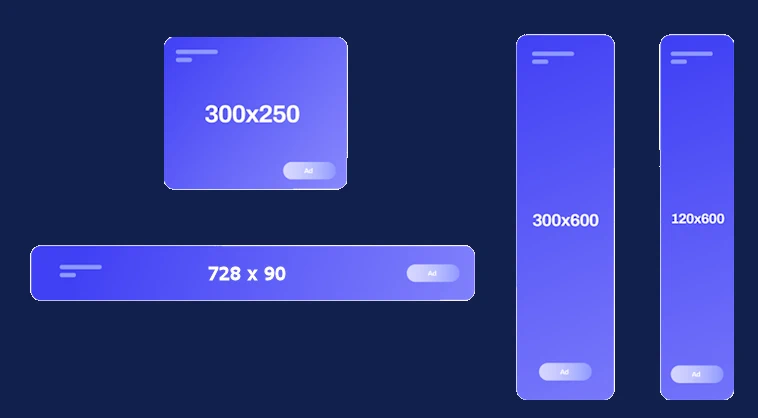
These dimensions are widely supported by major networks like and cover the majority of available web inventory.
- Medium Rectangle (300 x 250): The most versatile size, performing well when embedded in text or at the end of articles on both desktop and mobile.
- Leaderboard (728 x 90): Typically placed at the top of a page above main content for immediate visibility.
- Wide Skyscraper (160 x 600): A tall vertical unit usually placed in sidebars that remains visible as users scroll.
- Half-Page / Large Skyscraper (300 x 600): A high-impact vertical format ideal for storytelling and brand visibility.
Mobile-Specific Standards:
Mobile ads are optimized for smaller viewports and often serve as "anchor" units at the top or bottom of the screen.
- Mobile Leaderboard (320 x 50): The standard "reach" banner for mobile web and apps.
- Large Mobile Banner (320 x 100): Offers more vertical space for headlines and calls-to-action (CTAs) compared to the standard banner.
Video Advertising
Digital video advertising uses online video content to promote products or services across websites, social media, and streaming services, offering higher engagement than static ads. Key formats include pre-roll/mid-roll, and connected TV (CTV) often utilizing automated for precise targeting.
Video ads deliver your message across high-traffic websites, meeting your targeted audience where they browse. Below are Targeting Smarts requirements and recommended specifications for optimal performance.

Top-Performing Video Ad Sizes
For video ads common sizes include 300x250 (medium rectangle) and 320x480 or 480x320 for mobile, which often generate higher completion rates.
Connected TV
Ad Formats and Video Specs
- Aspect ratio: 16:9 (1920 x 1080)
- Max file size: 4GB
- Video length: 30 seconds max (15- and 30-second slots)
- Frame rate: 23.98, 25, 29.97 FPS (must be constant and based on native frame rate)
File type: .mp4 or .mov
Bumper Ads (a.k.a., in-line / pre-roll ads)
Bumper Ads are non-skippable short messages delivered before, during, or after a video plays. Even though bumper ads cannot be skipped, still aim to capture attention in the first few seconds to keep your viewer engaged as they wait for their video to begin. Bumper ads are shown on desktops, mobile devices, TV, and game consoles.
Video Ad Specs
- Aspect ratio: 16:9, 1:1, or 4:3. We recommend 16:9 as more and more viewers are consuming on their CTVs.
- Max length: Bumper ads are capped at 6 seconds and are designed to deliver quick, memorable messages before your viewer’s video starts.
- File type: Stick with MP4 (H.264) to ensure clean delivery across mobile, desktop, and CTV placements.